
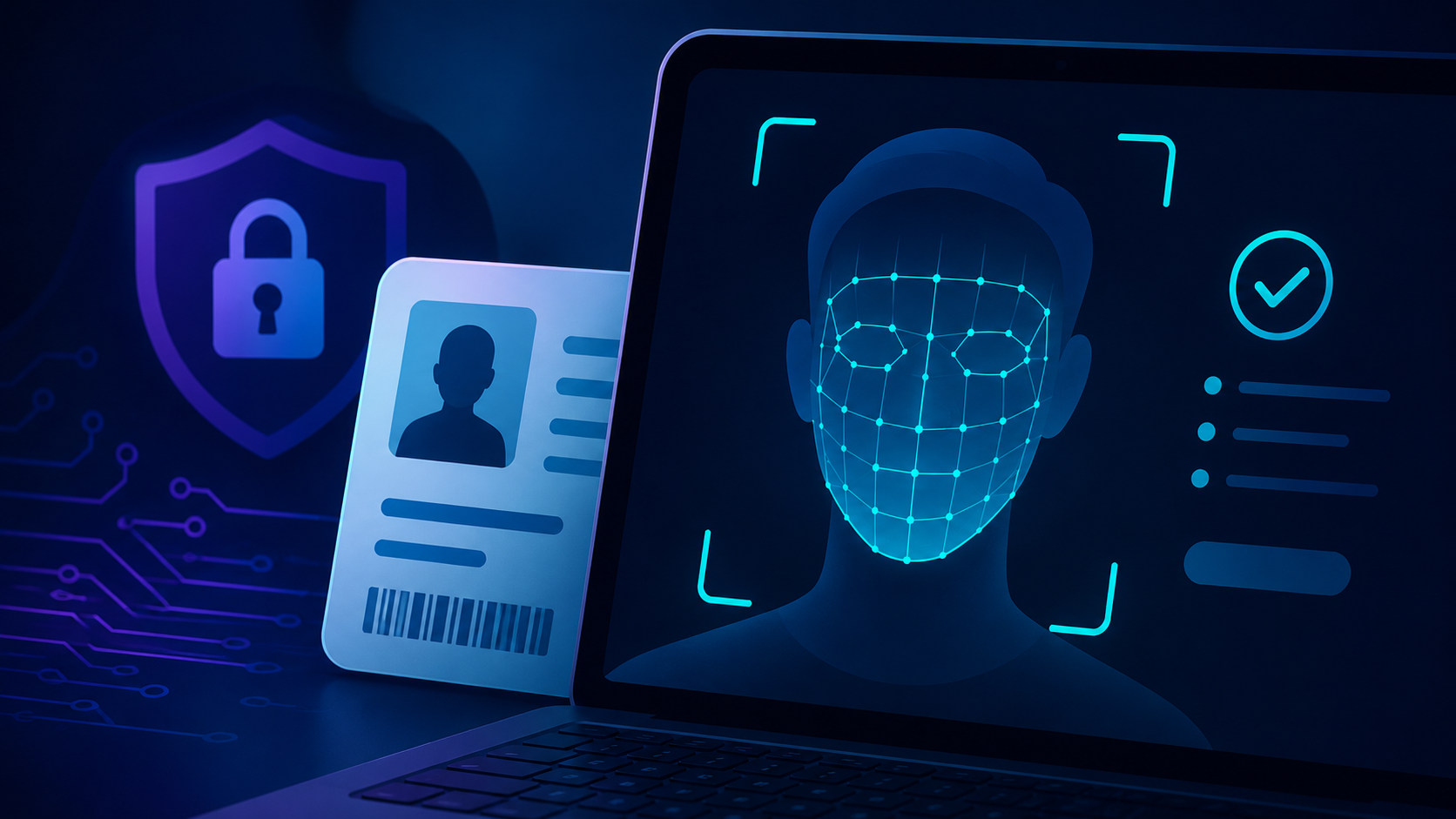
Claude Government ID Verification?
Quick Answer: Claude’s government ID check isn’t some blanket rule hitting every user; it only kicks in for flagged accounts, age checks, or certain higher-risk features. Free, Pro, and Max users can run into it; API and Enterprise users won’t. Persona handles the actual data, not Anthropic directly. It’s a hassle if you get picked, but for most people, it’s rare, and it won’t touch your everyday usage.
Okay, so picture this. You’re in the middle of a Claude session; maybe you’re knee-deep in a coding problem, or you asked it to help you draft something important and suddenly the screen just… changes. No warning, no heads-up email, nothing. Just this prompt: “Please verify your identity.” And then it asks for something you really weren’t expecting from a chatbot: a photo of your government-issued ID, and then a live selfie held up to your webcam.
Not a CAPTCHA. Not “click the boxes with traffic lights in them.” Your actual passport or driver’s license, matched against your actual face, in real time.
Yeah. If that sounds more like opening a bank account than chatting with an AI, you’re not imagining things, and honestly, you’re not the only one who got blindsided by it. Since April 2026, Anthropic’s been quietly rolling this out for some Claude users, and as of July 8, 2026, it’s now baked right into their official privacy policy. So a tool millions of people use for writing, research, coding, whatever is suddenly asking for the kind of proof you’d normally hand over to a bank.
Naturally, people had questions. Is this even safe? Who’s actually seeing my face and my passport number? Why is an AI company collecting biometric data all of a sudden? And probably the question everyone actually cares about is my account gonna get hit with this, or is it really just the ‘small subset’ Anthropic keeps talking about?
Here’s the thing though, the real story is way narrower (and honestly more interesting) than the panicked headlines made it sound. Most Claude users are never going to see this prompt. But the ones who do are running into something that says a lot about where AI tools are headed in 2026 especially with everything else going on around Anthropic’s Fable 5 access mess this summer.
So let’s actually break it down what’s happening, who it affects, what data’s really being collected, and what to do if that prompt ever pops up on your screen.
What Is Claude’s Government ID Verification, Exactly?
So, at its core, this is just a system Anthropic uses to make sure the person behind a Claude account is actually who they say they are and that they’re actually over 18, like they’re supposed to be. It’s not some new login step that everyone has to deal with. It’s a targeted check that only pops up when certain triggers get hit.
When it does show up, here’s basically what happens: you upload a photo of a government-issued ID passport, driver’s license, state ID, national ID, whatever you’ve got and then take a live selfie on your phone or laptop camera. The whole thing actually runs through Persona, a third-party identity verification company Anthropic partners with it’s not something Anthropic built or runs in-house. Persona matches your selfie against your ID photo using facial geometry, then just sends a pass or fail back over to Anthropic.
The policy officially kicked in on July 8, 2026, as part of an update to Anthropic’s privacy policy though honestly, they’d already been quietly testing it since mid-April. According to Anthropic’s own Help Center, they frame the whole thing as “platform integrity” basically a mix of stopping fraud, enforcing the 18+ rule, and staying compliant with states that require age verification for certain online services.
What really makes this stand out, though, is the type of data involved. We’re not just talking name and birthdate here it includes a scan of your actual ID document plus a facial geometry template, and several U.S. states (Illinois being the big one) legally classify that as biometric data. That matters because biometric data usually comes with way stricter legal protections than your average account info.
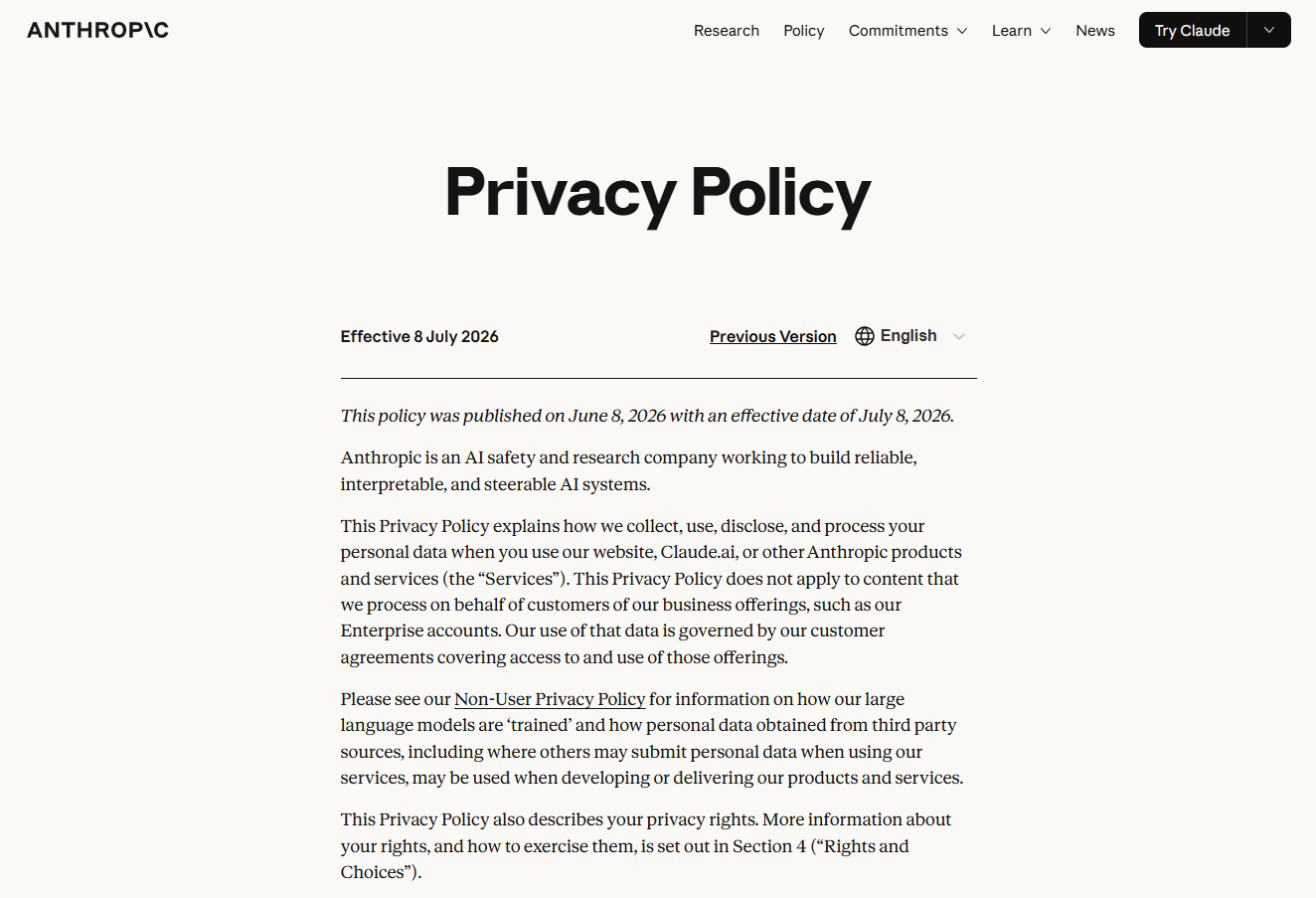
If you’ve read our Claude Sonnet 5 developer review, you already know Anthropic has been tightening safeguards across its entire Claude lineup this year identity verification is the consumer-facing side of that same push.
Why Is Anthropic Doing This Now?
Anthropic didn’t just wake up one day and decide to start asking for passports. This has been building for a while, honestly, and a few things kind of collided at once.
First up the law. More than two dozen U.S. states have passed rules requiring online platforms to verify how old their users actually are, and some of these laws now call out AI chatbots and companion apps specifically. So if Anthropic wants to keep operating smoothly across all those states, they need some way to confirm who’s really using Claude especially if that someone’s under 18.
Then there’s fraud and abuse. AI tools have basically become a magnet for people trying to automate scams, spin up fake accounts, or dodge usage limits. A government ID is one of the few things that’s genuinely hard to fake at scale. So by checking identity on flagged accounts, Anthropic can cut down on bad actors without slowing everyone else down.
And then there’s the bigger AI-safety picture. Claude isn’t just answering questions anymore it can browse the web, write code, take actions on your behalf. As these tools get more powerful, knowing who’s actually behind the keyboard becomes a much bigger deal, both legally and just from a basic safety standpoint. This also lines up with a rough patch for Anthropic in general that whole back-and-forth over Fable 5 access this summer, tied to U.S. export rules, put them under a much brighter regulatory spotlight. Tighter identity checks fit right into that same pattern: a company trying to show it can actually manage who gets access to its most powerful tools.
Put it all together and it’s really not one single decision. It’s Anthropic reacting to state laws, trying to cut down on abuse, and showing regulators it takes control seriously all happening at a moment when AI companies are under more pressure than ever to prove they’re being responsible.
Who Actually Has to Verify (And Who Doesn’t)
This is honestly the part most headlines got wrong. Claude’s ID verification isn’t some blanket thing rolled out to every single user it only kicks in for specific circumstances, and only for a specific slice of accounts.
Who’s actually in scope: Free, Pro, and Max consumer accounts on Claude.ai and Claude Code (when you’re logged in with a personal consumer login). Verification can get triggered by stuff like account flags for suspicious activity, age-verification needs, or trying to access certain higher-risk features.
Who’s off the hook entirely: Team, Enterprise, and Developer Platform (API) customers don’t deal with this consumer-facing flow at all. If you’re building on Claude through the API directly or through a gateway nothing changes for you. That side runs on API keys, not ID documents.
Who’s most likely to actually see it pop up: From what’s being reported, it’s a pretty narrow set of situations accounts flagged for fraud-like patterns, people who trip an age-verification signal, and in some cases, folks upgrading to a paid tier like Claude Max, where a verification step has shown up at checkout. Anthropic hasn’t published a full, exact list of what triggers it, which honestly is part of why the whole rollout has felt kind of unpredictable to people.
Bottom line: if you’re just a regular Claude user doing everyday chat, writing, or coding, the odds you’ll ever actually see this prompt are pretty low. It’s built as a targeted thing, not a universal gate at least for now.
That includes users running Claude Code for development work worth knowing if you’re one of the developers we covered in our Sonnet 5 review, since consumer login and API-key login are treated very differently here.
What Data Does Persona Collect and Is It Safe?
So when Claude asks you to verify, the whole process actually runs through Persona a third-party company Anthropic uses to handle the document checks. Persona grabs a photo of your government ID and your live selfie, then builds something called a facial geometry template basically a digital map of your face to confirm the ID photo actually matches you.
Here’s where it gets interesting: some states, Illinois being the main one, legally classify this kind of data as biometric information, which comes with extra protections under laws like BIPA (the Biometric Information Privacy Act). Anthropic says none of this data gets used to train their AI models or shared for marketing purposes. That said and this is worth noting they haven’t published an exact retention period, so there’s still some open questions about how long your ID and face scan actually hang around in Persona’s systems.
There’s also a wider retention question worth flagging: for context, Roblox another Persona customer says user images get deleted “immediately” after processing. Anthropic hasn’t made a comparable public commitment, which is the main thing privacy-focused users keep pointing to as the open question here.
How This Compares to ChatGPT, Gemini, and Other AI Tools
One of the loudest reactions to all this hasn’t even been about privacy alone, it’s been about competitive positioning. As of mid-2026, neither OpenAI’s ChatGPT nor Google’s Gemini require government ID or biometric verification for standard consumer access. So that makes Anthropic the first major U.S. frontier AI lab to actually formalize this level of identity checking in its consumer privacy policy.
And yeah, people noticed. The reaction was fast and pretty critical once the policy went public.
AI KYC is here.
New claude subscribers asked for gov ID & photo.
Not even a regulatory requirement – Anthropic just doing it because they want to.
But regulatory is coming
Next up will be laws:
No AI without gov-issued ID
All AI use tracked to individual – no private AI pic.twitter.com/nNzMdU21o6— RYAN SΞAN ADAMS (@RyanSAdams) April 15, 2026
Some critics say this basically hands a real advantage to Anthropic’s competitors if you want zero-friction access to an AI chatbot, there are options out there that won’t ask for your passport. Others see it a different way: as regulatory pressure around AI safety and age verification keeps ramping up, maybe Anthropic’s just getting ahead of a curve the rest of the industry ends up following anyway. Discord’s rocky run with Persona-based age verification earlier in 2026, where they briefly rolled it out, then walked it back after backlash keeps getting cited as a cautionary tale, whichever way this ends up going.
Whether this turns into an industry standard or just a one-off misstep unique to Anthropic, that’s still very much an open question heading into the rest of 2026.
What To Do If Claude Asks You to Verify Your Identity
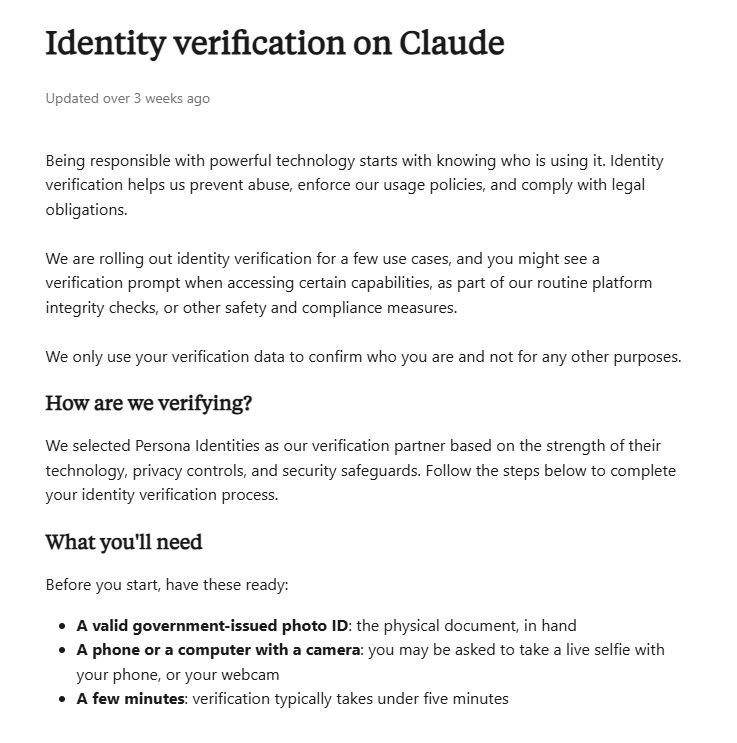
If you actually get the prompt, here’s the practical rundown. You’ll need a valid, unexpired, physical government-issued photo ID, passport, driver’s license, state or provincial ID, national ID card, whichever you’ve got. Photocopies, screenshots, digital scans, none of that flies, it’s gotta be the physical document, photographed live. You’ll also need a device with a working camera for the selfie part.
A few tips that keep showing up in user reports: do it in good, even lighting, watch out for glare on the ID surface, and double check the document isn’t damaged or expired. Most failures honestly just come down to blurry photos or bad lighting, nothing more dramatic than that and you’ll usually get a few attempts before you’re locked out.
If it keeps failing after several tries, Anthropic’s got a support form you can use to appeal manually, that’s your backup plan if the automated flow just won’t cooperate. One more thing, watch out for random third-party services online offering to “verify for you” or bypass the check. Legit verification only happens through Anthropic and Persona’s actual official flow, never through some third party asking for your login or ID separately.
- Claude Sonnet 5 for Developers Review: Security & Coding Breakdown our hands-on test of Anthropic’s latest coding model, including where its security guardrails hold up and where they don’t.
The Verdict
So where does this actually leave you? Honestly, this isn’t a “should you use Claude” kind of question, it’s more about knowing what you’re walking into if you get flagged.
If you’re a regular Claude user who’s never been flagged for anything weird, this whole thing barely touches you. You’ll probably never see the prompt, and if you do, it’s a five-minute process handled by a legit KYC vendor, not some random app harvesting your data for fun.
Where it gets genuinely annoying is if you’re someone who gets flagged repeatedly, you’re privacy-conscious about biometric data specifically, or you just don’t love the idea of handing a passport scan to a company you didn’t choose (Persona, not Anthropic). Anthropic not publishing a clear retention period is the one legitimate gap here that’s worth keeping an eye on rather than brushing off.
Compared to ChatGPT and Gemini, which don’t ask for this at all right now, Claude is clearly out ahead of the pack on this one. Whether that’s Anthropic being responsibly cautious or just adding friction nobody asked for kind of depends on how you personally feel about AI companies collecting biometric data before regulators force them to. Either way it’s not something that should scare off casual users, but it’s a real factor if you’re choosy about where your ID and face end up.
FAQ
1. Why is Claude asking me to verify my identity with a government ID?
It’s only in specific situations like if your account gets flagged for suspicious activity, needs age confirmation, or you’re trying to access certain higher-risk features. It’s not something every single user has to deal with. Anthropic says the whole point is preventing fraud and staying compliant with state age-verification laws, not tracking everyday usage.
2. Is it safe to upload my passport or driver’s license to Claude?
The process actually runs through Persona, a third-party company, your ID isn’t sitting on Anthropic’s own servers. Anthropic says the data won’t be used to train its AI models or get shared for marketing. That said, they haven’t published an exact retention period, so it’s fair to stay a little cautious there.
3. Do all Claude users have to verify their identity?
Nope, it only applies to a subset of Free, Pro, and Max consumer accounts, and even then only when something specific triggers it. Team, Enterprise, and API/Developer Platform accounts aren’t touched at all. Most people just chatting or coding with Claude will probably never see this.
4. Does identity verification affect Claude Code or the Anthropic API?
It can show up if you’re logged into Claude Code with a personal consumer account, since that runs through the same login path. But if you’re authenticating with an API key instead for Claude Code or anything else, verification just doesn’t apply. Your production pipelines and dev workflows stay untouched.
5. What happens if I refuse or fail Claude’s identity verification?
Verification can fail for boring reasons, blurry photo, expired ID, bad lighting and you’ll usually get a few tries to fix it. If you burn through all your attempts and it still won’t go through, there’s a support form you can use to appeal manually. But if you flat-out refuse when it’s required on a flagged account, you’re looking at restricted access or suspension.