
Claude Sonnet 5 For Developers Review (Quick Answer)
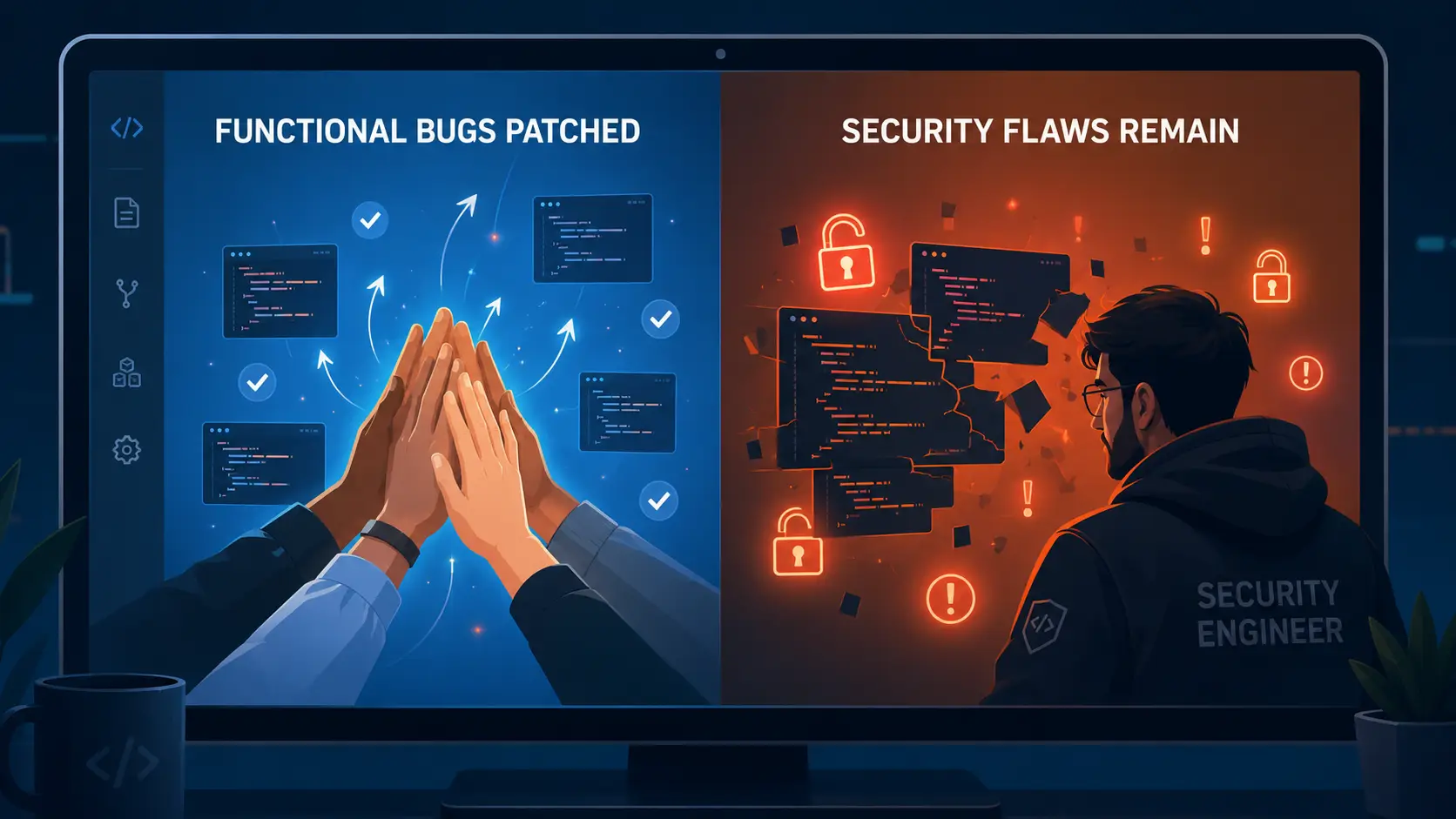
Honestly, Claude Sonnet 5 is an absolute beast if you want an agent that writes code that actually runs. But as a security engineer? It’s pretty average. It will happily ship a functional patch while leaving the actual vulnerability wide open. Use it to fly through your backlog, but do not skip the human code review.
1. What’s the deal with Anthropic’s new developer lineup?
Look at where Sonnet 5 actually sits right now. It’s basically the middle child, tucked between the super-fast Haiku models and the massive flagship Opus ones
But here is the real shift: Anthropic stopped building basic chatbots. They are building actual “agentic” tools that can handle multi-step tasks entirely on their own. If you are writing code, handling DevOps, or stressing over security every single day, this pivot changes everything about how you interact with an AI. I’ve been deep in our AI Coding Best Practices guide lately, and seeing how this shifts our team’s workflow highlights just how fast things are moving.
2. Coding with Sonnet 5 and the new “Claude Code” tool
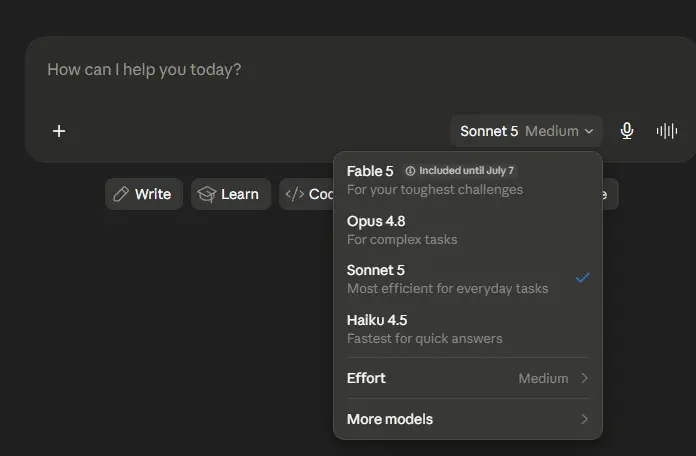
So, I was messing around with the new Claude updates to see if the coding hype was real. I pulled up the model selector, chose Sonnet 5, and dialed the Effort level to Medium. I really wanted to see how it handled a piece of legacy, absolute garbage code.
I threw a classic, heavily vulnerable PHP login script at it—the kind of terrible code that practically begs to be hacked. I told it to “Review this login function for security issues” and pasted a script that directly concatenates user input into a SQL query with zero sanitization.
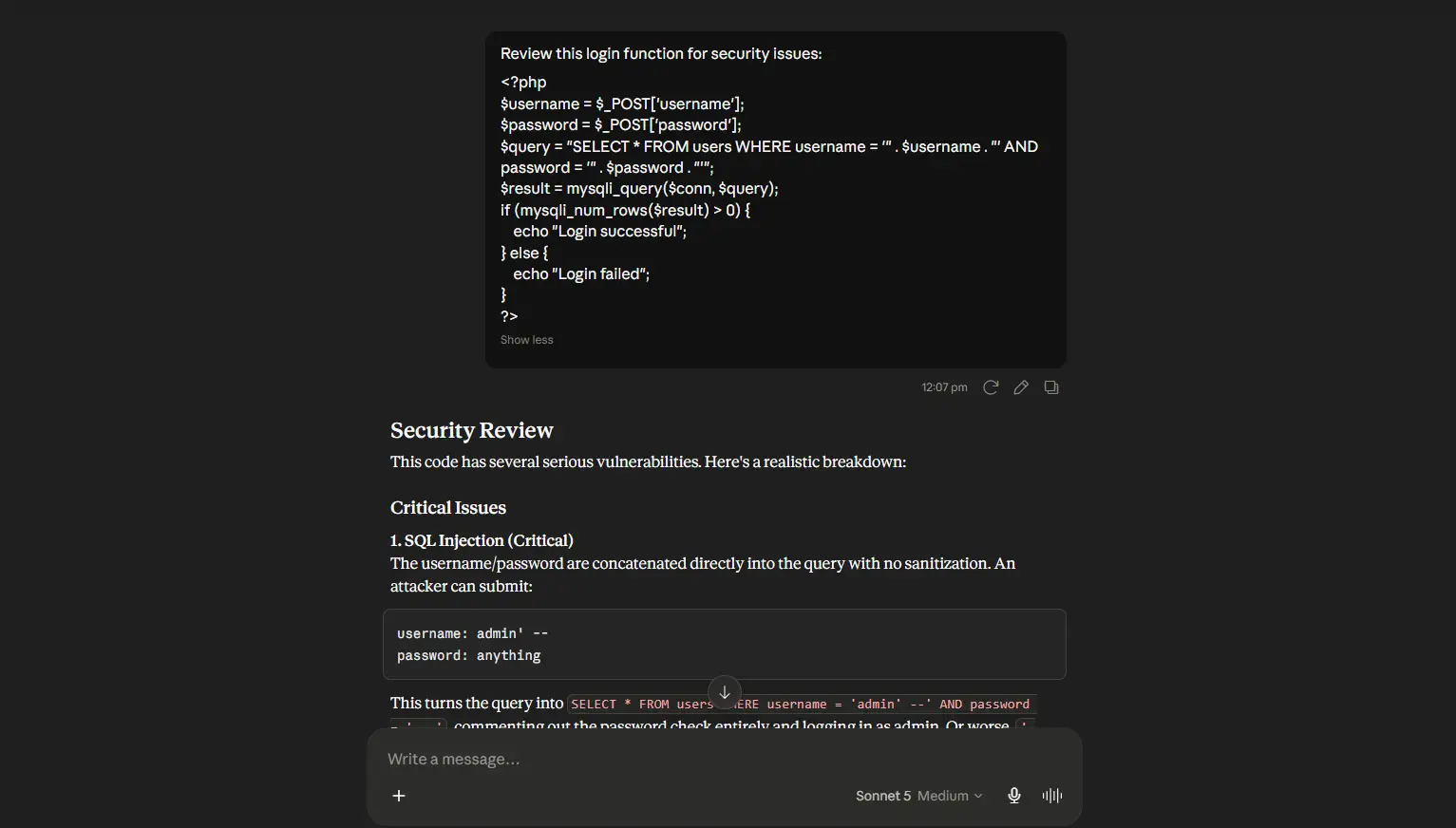
Man, Sonnet 5 didn’t just spot the obvious stuff; it completely tore the code apart. It immediately flagged the SQL Injection, showing exactly how an attacker could bypass auth using a basic admin' -- payload. It also called out the plaintext password storage and the lack of raw input validation.
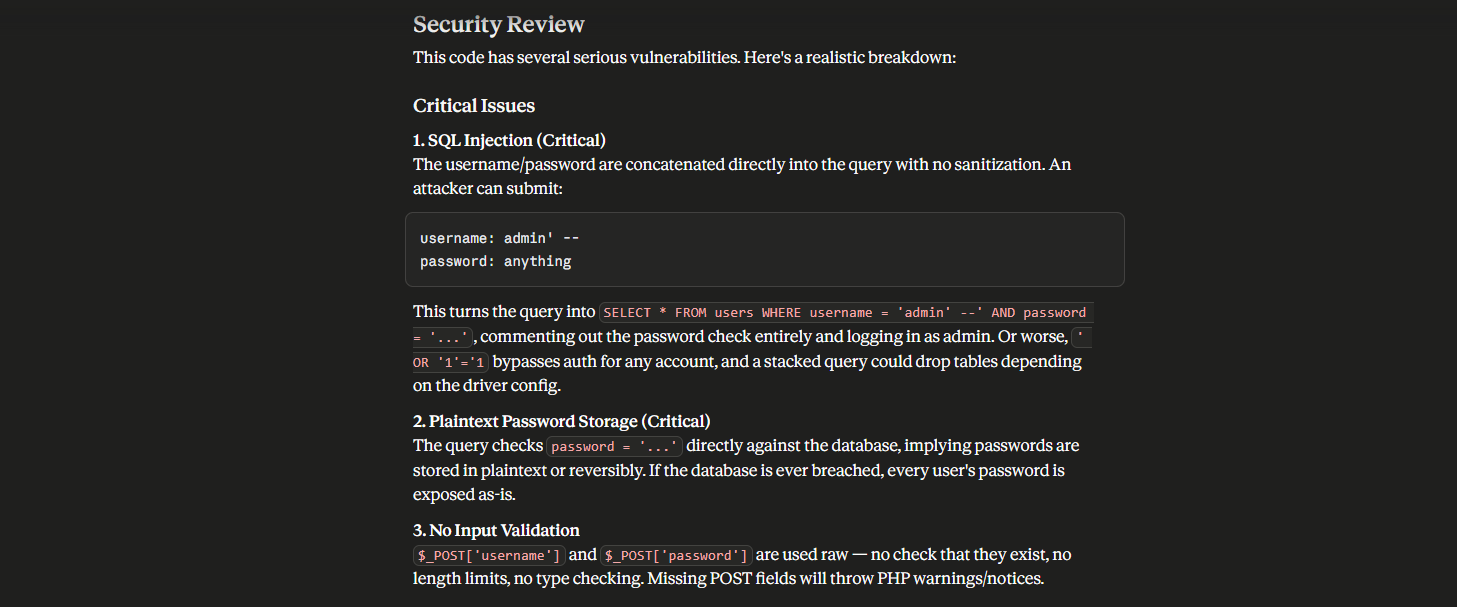
But it went further. It dug into secondary flaws, pointing out things like the lack of rate limiting for brute force protection, potential information leakage from descriptive error messages, and missing CSRF or session management protections.
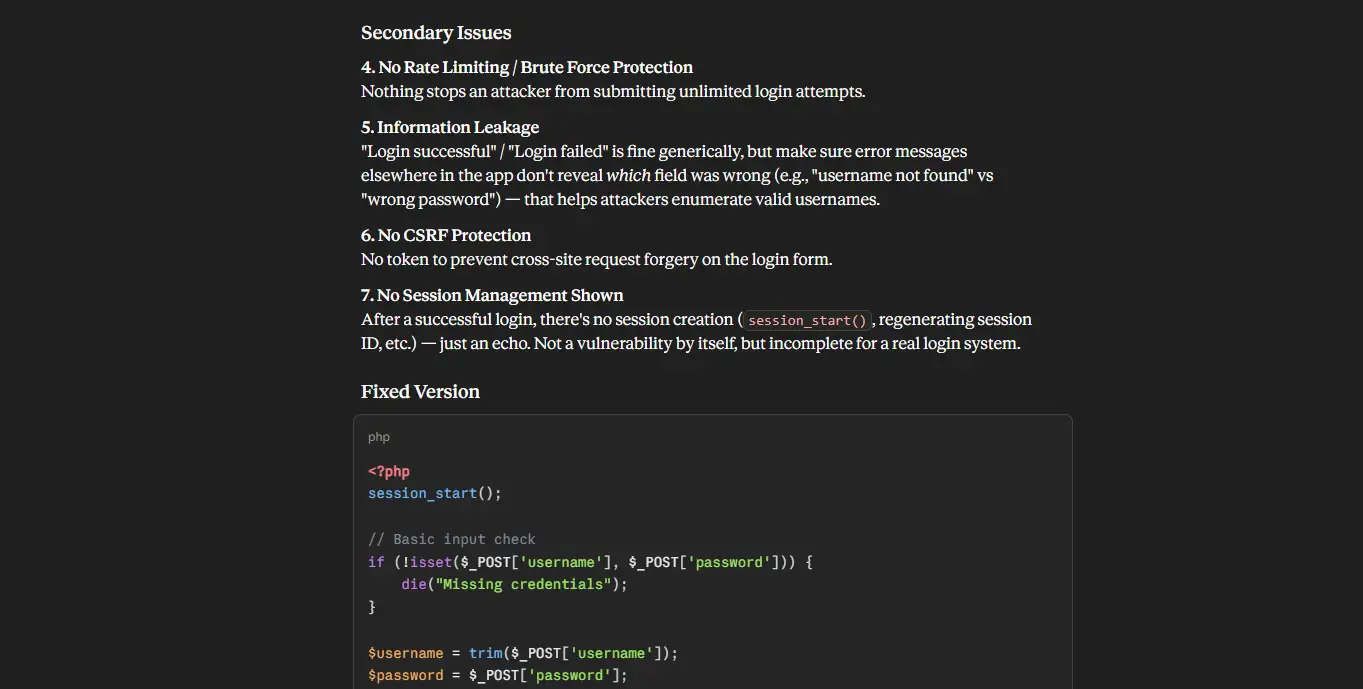
Then it rewrote the entire thing from scratch. It gave me a clean, secure version using prepared statements (mysqli_prepare), proper password hashing verification via password_verify(), proper session regeneration, and safe, generic error responses.
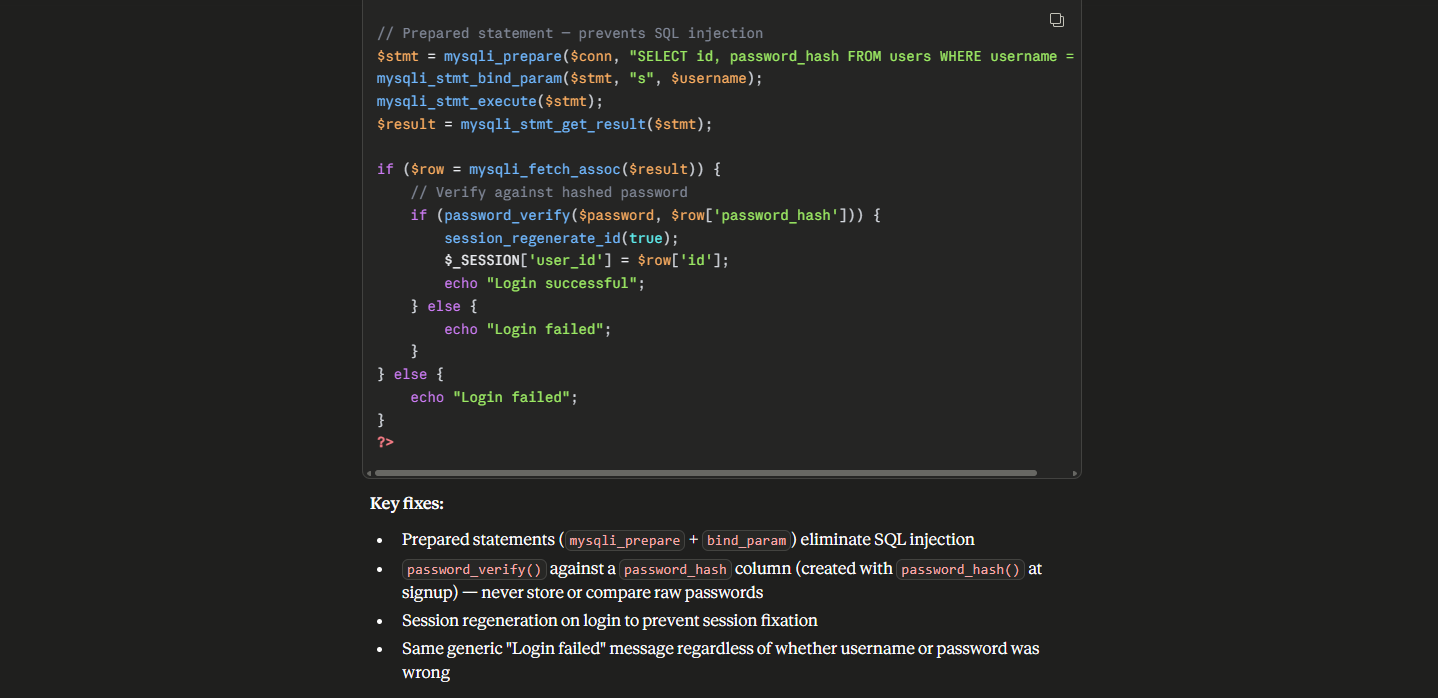
Watching it systematically dismantle a bad script and rewrite it securely in seconds blew me away.
3. The Security Catch: A Deeper Claude Sonnet 5 for Developers Review
If you hand Claude Sonnet 5 a broken script, it is incredibly good at making it work. It can write tests, find syntax errors, and refactor code so that it runs perfectly on the first try. But developers need to watch out for a major trap: functional code is not the same thing as secure code.
In recent industry benchmarks measuring how well AI models patch real-world software flaws, Sonnet 5 achieved an impressive 83.2% functional pass rate. This means it successfully modified the code to preserve its intended behavior. However, its security pass rate plummeted to just 19.6%. In other words, the model wrote working code roughly five times more often than it wrote code that actually closed the security vulnerability. It is a strong software engineer, but a mediocre security engineer.
When I tested this firsthand with that horribly vulnerable legacy PHP login script, the model’s sharp analytical side really shined. Running on medium effort, it didn’t just spot the obvious SQL injection and plaintext password storage; it systematically dismantled secondary flaws like missing CSRF protection, potential information leakage in the error messages, and a complete lack of rate limiting.
The good news is that Anthropic significantly hardened the model against direct attacks. Sonnet 5 features massive upgrades in prompt injection robustness. When hackers try to trick the AI into ignoring its safety rules through a browser or command-line interface, its failure rate drops close to 0% with safeguards enabled. It resists malicious inputs much better than its predecessor, Sonnet 4.6.
“I’ve been testing Sonnet 5 for its mental bandwidth which is somehow worse than Sonnet 4.6 but now that I’m looking back at its response, the hedging is obnoxious, especially at the higher thinking levels. Worse, it rambles while it hedges.”
— BrightNightKnight, Reddit Developer Community
Unfortunately, this heightened safety framework introduces a frustrating trade-off known as the “over-refusal” paradox. Because the model is so terrified of being manipulated into writing malware or helping with cyberattacks, it often gets overly defensive. If you ask it to perform normal, dual-use security tasks—like analyzing a piece of pentesting output, scanning a network wrapper, or checking for edge-case exploits—the model will frequently trip over its own guardrails and refuse your request outright. For more context on navigating these kinds of system limits, check out our deep dive on Anthropic API Architecture.
Ultimately, developers cannot treat Sonnet 5 as an automated security auditor. It can completely rewrite an insecure script from scratch using proper prepared statements (mysqli_prepare) and password_verify(), but you still must keep a human in the loop to review every line of code for underlying vulnerabilities.
4. Let’s talk about honesty and ripping off code
When it comes to ripping off code, benchmarks show Sonnet 5 is surprisingly “honest.” It rarely relies on memorizing or regurgitating exact public code blocks or CVE fixes word-for-word from its training data.
When it does make rare mistakes, it’s usually because of workspace leakage—meaning it unintentionally reads a pre-existing artifact left over inside its local testing container—rather than plagiarizing upstream data verbatim. Because the code is cleaner, enterprise teams can breathe a bit easier about code copyright compliance and keeping internal repositories safe. If you want to see how this stacks up legally across different vendors, look at our AI Enterprise Compliance Matrix.
5. Is it worth the money for engineering teams?
If you are looking at the API bill, you’ll need to weigh the token prices for input and output to see if it actually makes sense for your scale compared to OpenAI’s lineup.
The real value comes down to infrastructure synergy. It integrates nicely within secure enterprise environments (like Snowflake Cortex AI), meaning you have to balance the massive boost in developer velocity against the ongoing operational costs.
Real-World Developer FAQs
1. Can I trust it to patch security bugs, or just write regular code?
Here’s the catch: it’s incredibly good at writing code that runs and fixes functional bugs. But when it comes to pure security benchmarks, it lags behind a bit. It might give you a patch that works perfectly, but still leave a sneaky security vulnerability wide open if you don’t double-check it.
2. What exactly is Claude Code?
It’s Anthropic’s official command-line tool. Instead of copying and pasting code into a browser tab, you let Sonnet 5 run right inside your terminal. It can read your project files, run bash tests, and even write your Git commits for you. It’s more of a terminal agent than a chatbot.
3. Does it just copy and paste open-source code?
Actually, no. Benchmarks show Sonnet 5 is surprisingly “honest.” It rarely rips off public code or CVE fixes word-for-word from its training data. When it does mess up, it’s usually because it accidentally read a temporary file left over in its local testing container—not because it’s cheating.
4. Why does Claude keep refusing to write my code?
Because Anthropic turned the security filters up pretty high. It’s great at resisting prompt injections, but the downside is “over-refusal.” If your prompt even sounds like a cyberattack or a reverse-engineering exploit—even if you’re just doing standard pen-testing—it might get spooked and say no.
5. What’s the point of the “adjustable effort” setting?
It basically lets you choose between speed and brainpower. If you’re just writing simple unit tests, you turn the effort down so it’s fast and cheap. If you’re hunting down a massive, messy architectural bug, you turn the effort up so the AI runs deeper self-verification loops to catch its own mistakes.
The Final Verdict: My Honest 4/5 Score
Claude Sonnet 5 easily earns a 4 out of 5 stars in my book. It is absolutely worth it for software engineers, terminal-dwelling developers, and product teams who want an autonomous powerhouse to speed up daily builds, run CLI workflows, and refactor messy codebases. However, it is absolutely not worth it as a standalone auditor for security engineers or teams looking for foolproof vulnerability patching.
The reality is simple: its ability to write working code that passes functional tests is top-tier, but it frequently lets security flaws slip right through the cracks. It operates brilliantly as a highly capable assistant, but its lackluster security pass rates and annoying over-refusal paradox mean you cannot leave it unsupervised. Use it to supercharge your velocity, but keep a human engineer in the loop to handle the ultimate security sign-off.
8 thoughts on “Claude Sonnet 5 for Developers Review: Security & Coding Breakdown”